
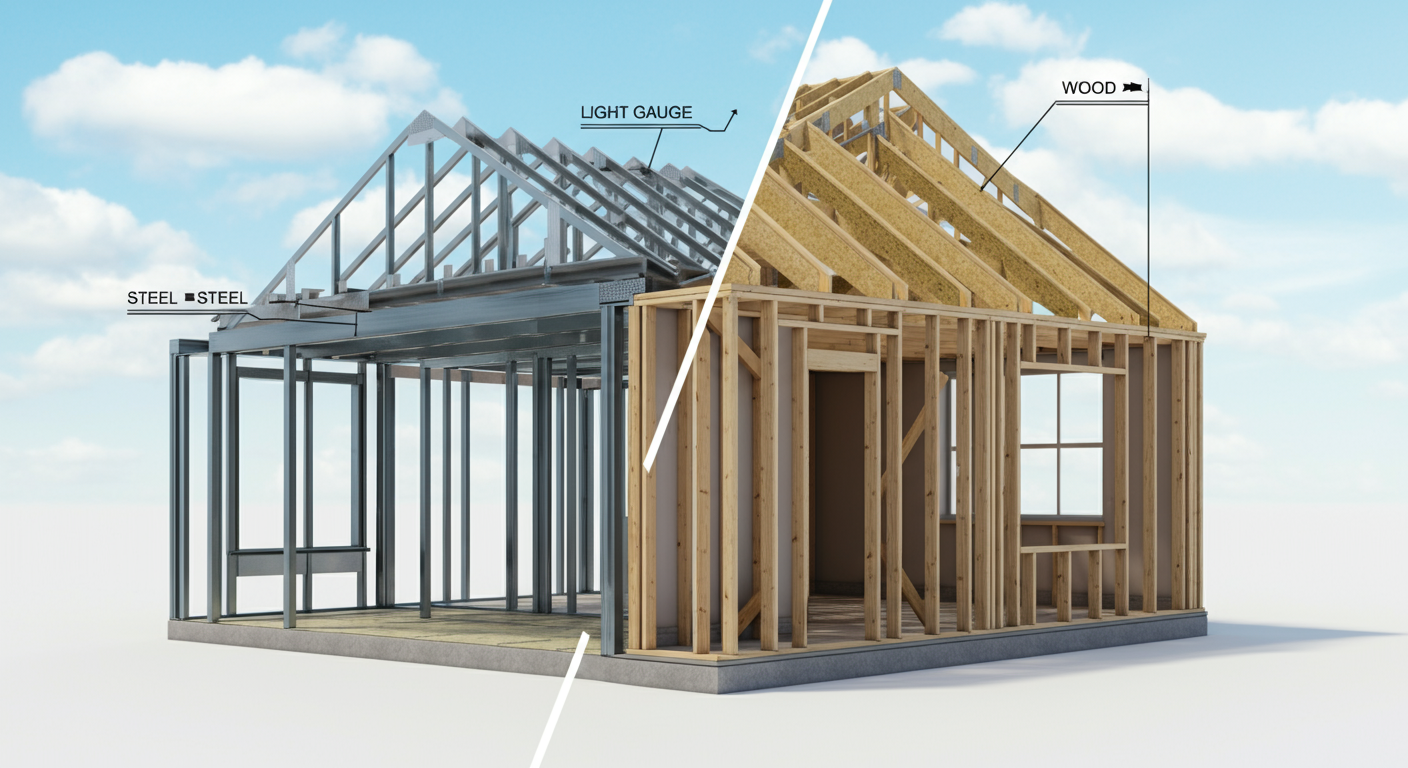
When it comes to modern construction, one question appears again and again:
Is light gauge steel better than wood framing?
With rising sustainability demands, labor shortages, and the need for faster, higher-quality builds, the choice of framing material matters more than ever.
In this guide, we break down strength, durability, cost, sustainability, engineering value, and long-term performance so you can decide confidently.
What Is Light Gauge Steel?
Light gauge steel is a cold-formed, lightweight, high-strength steel used for structural framing in residential, commercial, and multi-family construction.
It offers superior durability, dimensional stability, fire resistance, and significantly lower waste compared to wood.
Quick Comparison: Light Gauge Steel vs Wood Framing
| Feature | Light Gauge Steel | Wood Framing |
|---|---|---|
| Durability | High | Medium |
| Fire Resistance | Excellent | Poor |
| Termite Resistance | 100% | Vulnerable |
| Energy Efficiency | High (no thermal bridging with advanced systems) | Medium |
| Waste | ~1% | 20%+ |
| Lifespan | 75+ years | 30–50 years |
| Sustainability | Highly sustainable | Requires trees |
Winner: Light Gauge Steel for long-term performance and sustainability.
Why Light Gauge Steel Framing Is Better Maximum Structural Strength
Light gauge steel framing offers one of the highest strength-to-weight ratios in construction.
This means:
- Straighter walls
- Zero warping or twisting
- No weak spots
- Consistent structural integrity
This makes it ideal for structural engineers who need predictable, code-safe framing.
Engineers prefer steel for reliability, design flexibility, and compliance with today’s safety standards.
Eliminates Thermal Bridging (Energy Savings 60%+)
Traditional wood framing loses heat quickly because wood conducts temperature changes.
Advanced light gauge steel systems, like the KRATOS™ steel framing system, eliminate thermal bridging through smart design and insulated layers.
Benefits:
- 60%+ energy savings
- Better HVAC efficiency
- Lower monthly utility costs
- Improved indoor comfort
Fire, Moisture & Termite Resistance
Unlike wood, steel does not burn, rot, or attract insects.
Light gauge steel is:
- Fire-resistant
- Mold-resistant
- Termite-proof
- Moisture-stable
This reduces long-term maintenance and increases safety—especially in humid or fire-risk regions.
Sustainable & Low-Waste Construction
Light gauge steel generates less than 1% waste, compared to 20–25% waste with wood.
It supports eco-friendly building goals by:
- Using recycled steel
- Reducing landfill waste
- Lowering carbon impact
- Eliminating the need to cut trees
For builders targeting LEED, FGBC, or other green certifications, steel framing is a clear advantage.
Faster Installation & Smarter Fabrication
Light gauge steel framing integrates perfectly with:
- Virtual design & engineering
- CNC roll-forming systems (FRAMECAD®, Scottsdale®, Howick FRAMA™)
- Conversational design workflows (digital to physical fabrication)
This reduces:
- Jobsite errors
- On-site cutting and framing time
- Skilled labor requirements
The result is up to 50% faster builds, making steel the top choice for both residential and commercial construction.
How Conversational Design Enhances Steel Construction
With digital modeling, conversation design and conversational design workflows streamline communication between:
- Designers
- Structural engineers
- Fabrication teams
- Contractors
This leads to:
- Clearer project planning
- Reduced engineering conflicts
- Faster permit-ready plans
- Clean handoff from design → fabrication → install
A conversation designer ensures all teams understand the framing system, improving accuracy and reducing rework.
Why Structural Engineers Prefer Steel Framing
Structural engineers benefit from light gauge steel because it provides:
- Precise load calculations
- Consistency across all framing members
- Stronger resistance to wind & seismic forces
- Better alignment with modern building codes
Steel framing also allows engineers to design taller, wider, and more open layouts compared to wood.
Final Verdict: Light Gauge Steel Is Better than Wood
If your goal is strength, sustainability, speed, and long-term value, then light gauge steel framing is the superior choice.
- You get:
- Faster builds
- Stronger structures
- Better energy efficiency
- Greater comfort
- Lower maintenance
- Eco-friendly impact
Whether you’re a builder, homeowner, or structural engineer, steel framing delivers better performance in every major category.
What is light gauge steel framing?
Light gauge steel framing is a cold-formed steel construction system used for residential, commercial, and multi-family buildings. It provides high strength, fire resistance, and superior durability compared to traditional wood framing.
Is light gauge steel stronger than wood?
Yes. Light gauge steel has a significantly higher strength-to-weight ratio than wood. It does not warp, crack, split, or develop weak spots over time, making it more structurally reliable for both engineers and builders.
Is steel framing more expensive than wood?
Upfront material cost can be slightly higher, but steel framing saves money long term through:
Faster installation
Lower waste
No termite or rot damage
Reduced maintenance
Higher energy efficiency
Many projects end up costing less overall with light gauge steel.
Does light gauge steel help with energy efficiency?
Yes. Advanced steel framing systems eliminate thermal bridging and can deliver up to 60% energy savings, reduced HVAC usage, and more consistent indoor temperatures.
Is steel framing fire-resistant?
Absolutely. Light gauge steel is non-combustible and does not contribute to fire spread, making it safer than wood framing, especially in high-risk or wildfire-prone areas.